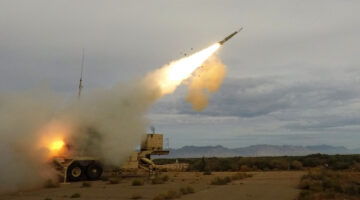
Defense Department selects Poland for new PAC-3 maintenance facility
The US, in partnership with Lockheed Martin, Poland, Germany, the Netherlands and Sweden, announced the new facility aimed at scaling and speeding up Patriot interceptor repairs.
The US, in partnership with Lockheed Martin, Poland, Germany, the Netherlands and Sweden, announced the new facility aimed at scaling and speeding up Patriot interceptor repairs.
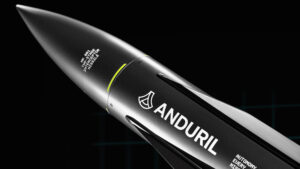
Anduril executives said the system can be “reconfigured” to be tailored toward defeating both low cost and exquisite systems.


Systems that can work independently while still being part of a unit are critical to carrying out multi-domain operations.

Army Secretary Dan Driscoll explained that the plan is for the Army to break down the interceptor into subsegments and buy them — and their IP — separately, allowing the Army sole ownership of the interceptor.

Denmark was also approved to potentially receive thousands of GPS guidance kits for 155mm shells.

“The procurement of a second type of guided missile [PAC-3] for the Patriot system expands the capabilities of longer-range ground-based air defense and increases the endurance of the Swiss Army” said Switzerland’s federal department of defense, civil protection and sport in a translated statement.

"I think about the value of training forces that never previously had a capability like that and then we provide that capability to them. And they're able to conduct an intercept in that way," Gen. Charles Flynn said. "To me that's that's the bigger issue."

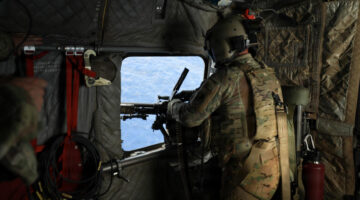
Distance, sparse infrastructure, and contested communications force a different approach to connectivity.

Rapidly delivered digitally advanced and intelligently supported solutions to the warfighter.

Boeing is embracing speed, agility and affordability to deliver the most digitally advanced, simply and efficiently produced, and intelligently supported products and capabilities to outpace the unprecedented threats and challenges of a fast-moving future battlespace.

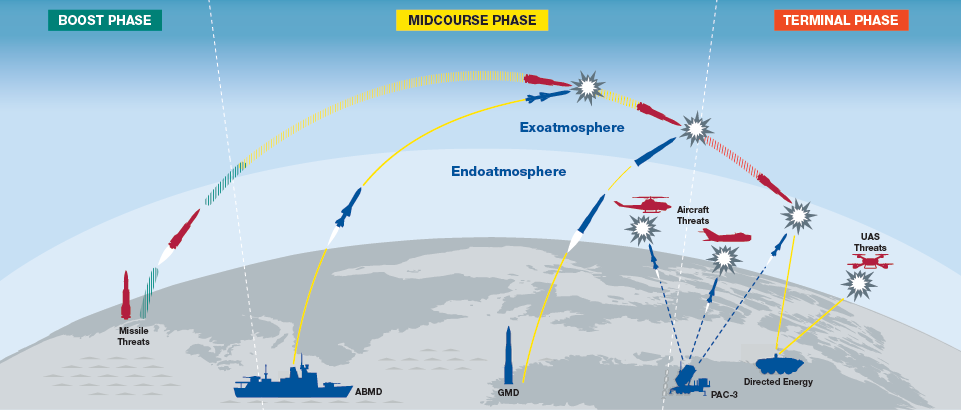
The Missile Defense Agency (MDA) is reportedly finishing its study of command and control architecture options to best defend Guam, the farthest outpost of our homeland. This new C2 system must have three features: an open architecture, the ability to bring different services’ radars and interceptors together, and disaggregation. Since leaving Indo-PACOM to pursue other […]

A senior source here said industry's complaints are exaggerated: "The ministry has to take into account many issues that are not directly connected to the profit line in the annual reports of the companies."

There is no single answer to the drone threat, pushing the Pentagon toward a broader mix of defenses.

A record number of ballistic missile and drone attacks have tested Saudi air defense capabilities. They've succeeded admirably but at a high cost.